
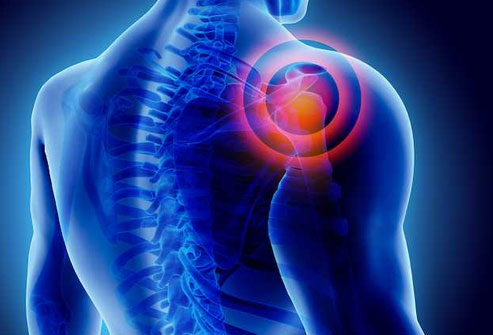
Frozen shoulder, Dupuytren’s contracture, Ledderhose disease, and Peyronie’s disease share a common problem: abnormal scarring (fibrosis).
These conditions affect 5–10% of people worldwide. They occur when fibroblasts—cells that make connective tissue—become overactive and produce too much stiff collagen.
Three Key Drivers
- Advanced Glycation End-products (AGEs) – Common in diabetes, these trigger fibroblasts to become overactive
- Growth Factors (TGF-β) – The “master switch” that signals continuous collagen production
- Genetics – Certain gene variations increase your risk, especially with family history
The “Fibrotic Diathesis”
If you have one condition, you may be at higher risk for others. This tendency to form excess scar tissue across different body parts is called fibrotic diathesis.
Commonly linked conditions:
- Dupuytren’s contracture (hands)
- Frozen shoulder
- Ledderhose disease (feet)
- Peyronie’s disease
- Knuckle pads
- Trigger finger (some cases)
Non-Surgical Treatment
Dr. Chin offers a non-surgical approach using intralesional injections—targeted treatment that works directly on fibrotic tissue, with over 400 patients treated.
D. Chin et al, What is transforming growth factor-beta (TGF-b)? The British Journal of Plastic Surgery (2004) 57, 215–221